26 min read
Insomniacs Anonymus: Red Light Therapy for Sleep

Story time: How I stumbled upon red light therapy for sleep?
Red lights at night sound naughty, right? This is not that kind of story, unfortunately. It’s a com-dram including insomnia, husbands in deep sleep, cats, and unexpected bedside lamps. If you’re already bored and are only interested in the red light therapy for sleep benefits, you’re welcome to skip the intro, dear, and good night. For the rest of you midnight oil burners, let’s go.
Tick-tock, drip-drop, whoosh, tick-tock, tick-tock... the relentless sounds of the night drill their metronomic precision into my skull as, yet again, I try to force myself to get (and stay) asleep. If you've ever been there, you know that forcing it doesn't work at all; it just gets you more frustrated and more awake. There’s a particular kind of exhaustion that no amount of reading, hot showers, herbal tea, or “just one more episode” can fix. The kind where your body is tired, but your mind is… lit up. Bright. Awake. Almost defiant. You have great ideas and can make Pinky & the Brain plans to rule the world, but those plans are only valid before dawn when the light of day exposes them as delusions of a tired person. So I kind of started to worry about myself, not dreaming that red lights at night would be my savior.
I have a good life, sure a solid dose of regular "being alive" problems like bills, rent, work, drunk uncles, unhinged cat, and some phantasies about moving away and starting a goat farm (George (the cat) would love it) and so, but I am not in an existetial crisis of apocalyptic proportions hanging on for dear life. There is no life or death emergency or unfair suffering to hang the hat of not being able to sleep on or to justify my poor sleep quality. My mental health is ok-ish, I'm not spiraling out of control and have no major health issues (outside pending ones due to my strange refusal despite myself to use the gym membership (that I had paid for) and the lack of shrubbery on my plate).
I am doing just fine, and the voices in my head are finally quiet. I'm kidding, there were none (scared you there for a bit, huh?; see, I'm also (sort of) funny). There is no emotional or mental burden, cortisol-baptizing me into an insomniac. Well, not really an insomniac. I do fall asleep eventually and sometimes even manage to stay asleep, but tend to crash and burn around 3 PM (should have eaten more of that mentioned shrubbery instead of cereal), but I couldn't be bothered to cook (or even assemble) something from scratch - because I was tired, because I couldn't fall asleep until 2 AM. So I ate junk all day long to give myself golden shots of that sugar to stay awake, only to be hyperawake when it was time to go to sleep by normal human schedules (at least George likes it when we're awake together at wee hours of the morning, talking about hunting and mice in the attic).
After I've examined the possibilities such as being a very special superhero needing far less sleep than my other human counterparts, unconsciously fighting the system thatt’s telling me what to do and when to do it, and being somehow predestined for bigger things, such as being the ever-awake shaman in some remote village (you can just tell this was one of those brilliant 3 AM ideas, can't you?), I've come to realize that if my problem was not mental, emotional or tied to a specifically stressfull temporary external circumstance, it must be something biochemical, some body system must be malfunctionning. It's like hearing about those people depressed for no obvious reason (by their own personal account), who figure out after years of torture that the problem was the lack of some neurotransmitter, that they were not crazy, just something biochemically went wrong. I had no idea how to use red light therapy for sleep yet, but figured out something (which I later found out was melatonin) was not being produced, I felt like something was out of whack, like I didn't know if I was coming or going, and that one day I'll meet myself at the door (turns off my circadian rhythm was waaay off). I’ve also suspected for a while that I’m overly sensitive to blue light, which had (via screens) been insulting my retinas right up to a moment when I lay my head down expecting a good night's slumber.
Since I’ve had places to be and people to see on a daily basis, and my sleep disturbances started to present a problem in living a happy, healthy, and productive life, I’ve toyed with the idea of sleeping pills. My rationale was that I would fix a chemical problem by chemical means. But pharmacology and self-medicating (except with wine and daydreams of more cats) have never really been my thing. I decided I don't want to be dependent on pills, not in the least due to hearing horror stories on how fast one can get addicted and how hard it is to taper off.
For a moment there, I was lost and thought about lifestyle changes I could make, based on advice from infinite articles, my clinically-dead-while-he-sleeps husband, and AI answers. If you’ve been human for a while, carrying this good ol’ meaty command board on top of your neck for a few decades, you know how hard it is to change and how much energy even a small change requires to break old patterns. This is logical because nature and bodies are smart. They conserve mental energy by automating actions, so you can take shortcuts and not have to ponder each choice. These shortcuts become our habits, ever more rooted, the more we repeat them.
I’m also young. Pre-40s are the new pre-30s, and after a particularly bad week of semi-insomnia, I noticed my eyelids drooping and some dark circles. That was it! I was no longer playing and got serious about helping myself. Never would I have ever thought in a million ZZZs that my solution would be coming from something I’ve always associated just with skin treatments - red light therapy. Turns out we’ve just been offered a tiny sliver of the story through the beauty industry narrative. Sure, red or NIR infrared light will fade those signs of aging, but as I researched, I found out so much more about light therapy and realized that, in addition to skin rejuvenation, it can be used to treat Seasonal Affective Disorder - SAD ( this I had some vague knowledge on as we’ve traveled to the nordic countries), acne, psoriasis and exzema, vitiligo, jaundice in newborns, help heal wounds and repair cells, for pain management, hair regrowth, cancer care, and... And sleep disorders!
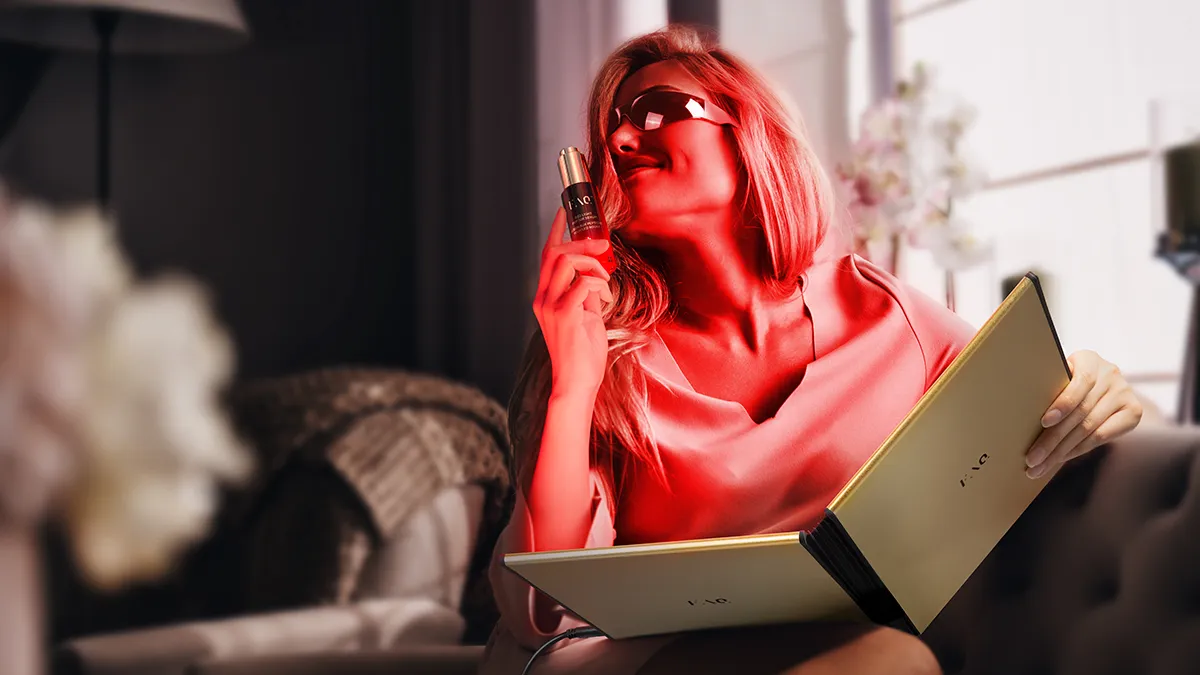
So I’ve decided to try a red light therapy lamp for sleep as a non-invasive way to balance out my circadian rhythm and get it back into the whack it fell out of. I am a skeptic by nature, and I was not so convinced at the start. It seemed strange that I’d give a task so important to something so banal as light. So I didn't actually invest in my own red light lamp (hey, cat food is expensive.. I actually have two cats, I just didn’t want you to write me off as a cooky cat lady in the beginning and dismiss my success story right of the bat (s*** crazy)), but got a used one from an early adopter friend who got some bigger red light panels for her home. I had no problem with this hand-me-down, as I googled “is red light therapy good for sleep” at some ungodly hour. There‘s so much fake news counterfitting our reality that I had zero reason to believe this would do anything. But George and Fleka (the other cat) said to try it (the husband was sound asleep for this 12:43 AM meeting). Intrigued by the red light before bed benefits I’ve been reading about, I said what the hell, the worst thing it could do is nothing.
Why use red light at night?
The brain doesn’t have a clock, as we know clocks, which measure discrete increments of time. Clocks are a human invention, and light regularity is nature’s. So our brains evolved reading light signals throughout our entire existence as a species because it was the thing we could steadily rely on - the sun will come out tomorrow (Bet your bottom dollar - sang orphan Annie).
Scientists experimented with chronobiology (the study of how the body itself keeps time), sealing themselves in completely dark caves and living for weeks and months in a total absence of sunlight or social cues about what “the time” is. Without the influence of natural light or social regularity, their circadian rhythms shifted, ranging from roughly a 25-hour internal clock to about 48-hour days, with 36 hours of activity followed by 12-14 hours of sleep, and even instances of 33 hours of sleep and 72 hours of wakefulness. Sometimes the monotonous, lightless days would compress, seeming to last only a few minutes. They lost time, had trouble forming memories, felt isolated, deeply lonely, depressed, and their general health deteriorated in the absence of sunlight for weeks and months. We need sunlight, and although we have an internal clock, left to its own devices, it would drift wildly, cutting us off from normal life rhythms and social schedules.
So we’ve adapted to interpret light as the primary signal that regulates our circadian rhythm. Circadian rhythm is a repeating metronome in our bodies, a wave driven by melatonin and cortisol, which are controlled by the suprachiasmatic nucleus (SCN). You don’t need to remember the name, but just remember that it’s sort of a "master clock" in the hypothalamus that reacts to light-dark cycles. It is your internal 24-hour clock that decides when you feel awake, alert, or are ready to sleep.
Melatonin is the hormone that tells your body to relax and wind down, and cortisol makes sure you wake up in the morning and can pay alert attention during the day. It got a bad rep as the stress hormone, but it’s actually natural, necessary, and vital to life when following a healthy daily curve. If the rhythm of the dance between melatonin and cortisol is disturbed, your circadian rhythm will be off, and your sleep-wake cycle and sleep quality will be shot. This is a scientific fact, and a problem often observed in blind people with zero light perception. They will drift away from a regular cycle and desynchronize, just like the people in the cave, developing what is called Non-24-Hour Sleep-Wake Disorder (Non-24), with erratic sleep-wake cycles that can be improved by taking melatonin in the late afternoon and evening to reset the clock. Unfortunately, if you’re completely blind, red light therapy for sleep will not do much for you. You may get better wound healing, pain management benefits, or skin improvements, but no improvement in sleep quality.
Red Light vs Blue Light
Blue light - the kind emitted by phones, laptops, and overhead LEDs - that I’ve mentioned being a culprit in my own sleep disruption experience (a recovering doom scroller here) actually suppresses melatonin production. That’s not just anti-tech, let’s-all-read-by-candlelight-in-potato-sack-dresses nostalgia, but a well-documented phenomenon perfectly in line with our ancient biology. You may be 20, 30, or 40, but your body is 7 million years old, and it has only had electricity for a measly second of it. We now know that evening exposure to blue light delays sleep onset and reduces sleep quality. All bright light before bed will have some impact on delaying sleep and influencing sleep architecture, but blue light is particularly effective at suppressing melatonin production, as shown in a 2025 study comparing the effects of blue and orange light on sleep patterns.
Unlike the very disturbing blue wavelengths that fill the late evening hours in our modern world, red light has minimal impact on melatonin production and circadian rhythms as it doesn’t signal “daytime” to your brain. Quite the opposite, it mimics the wavelengths perceived in a sunset and allows your biology to continue its natural descent into sleep.
Research suggests that exposure to red light can actually support melatonin levels rather than disrupt them. A study published in the Journal of Athletic Training asked, "Does red light therapy help with sleep?" and examined the effects of red light on sleep quality and endurance performance in elite Chinese female basketball players. They implemented a 14-day whole-body irradiation with red-light treatment and concluded that it improved sleep quality, serum melatonin levels, and endurance performance. So, red lights at night are not just a cozy twist or evening mood lighting but are actually functional tools for better sleep.
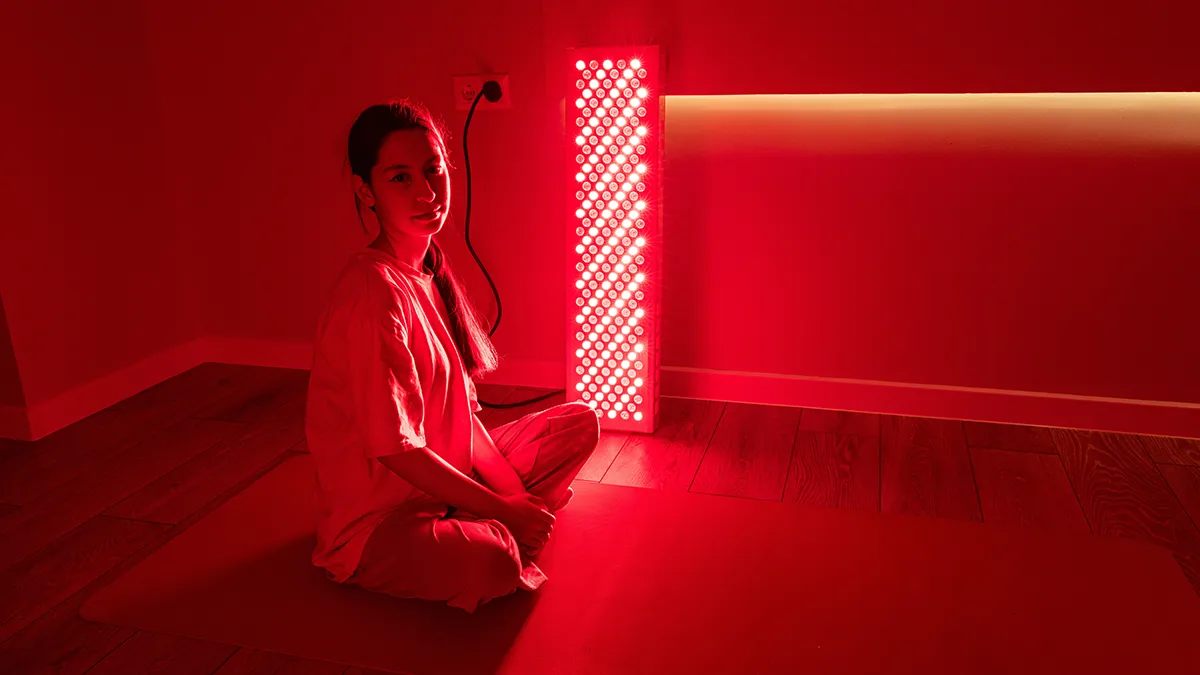
They are also safe and have very few to no side effects, if you use them as intended. If your device is very strong and the instructions say to avoid overly bright or direct exposure to the eyes, follow them every time, use the device as instructed, and stick to the treatment durations recommended by the manufacturer. As in all things, there is an optimal window of best return, after which the benefits drop.
The beat of the circadian rhythm
The word "circadian" is a fusion of two Latin words that combined mean something like "about a day". "Circa" means "around," "about," or "approximately,” and "Diem" is an accusative of "dies", meaning "day". The term was coined in 1959 by German-born biologist Franz Halberg from a need to denote a roughly 24-hour cycle of biological processes.
In a healthy, vital body, the circadian rhythm has a steady beat with minimal variation. To be at your best high-performing self, you’d usually feel tired, go to sleep, and wake up at about the same time, and would have a solid sleep quality where you sleep through the night on most nights. This is the first thing they’ll tell you if you’re recovering from anything physical or mental, fighting an illness, or even trying to lose weight - you need to get your sleep in order, because nothing else will work if you don’t. But the circadian rhythm is not just about sleep; it governs many other functions, such as body temperature, hormone release patterns, metabolic efficiency, and cognitive performance. We all know what an emotionally incontinent, brain-fogged, carb-seaking, now-cold-now-hot, semblance of a human we are after a night of poor or no sleep (all you newborn moms out there, hang on, this too shall pass).
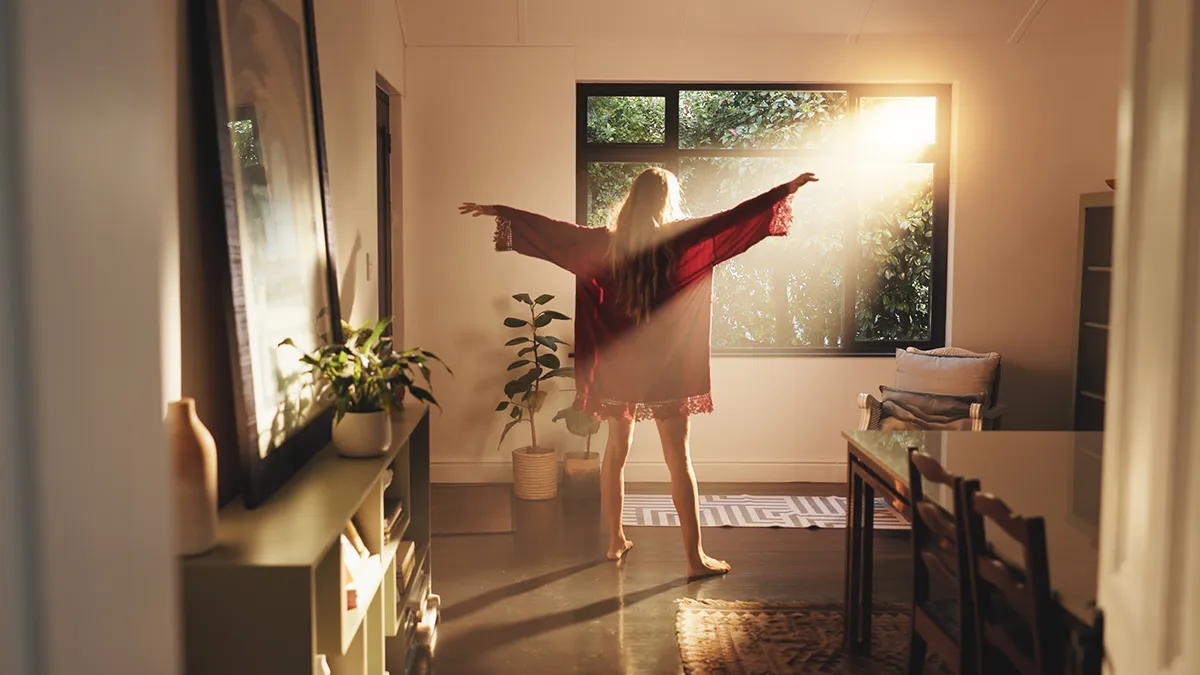
The circadian rhythm evolved in sync with the sun. Bright, blue-rich light during the day supports alertness, suppressing melatonin production, while darkness (or warm, low light) at night signals the body that it is time to rest and repair. This is how it was for eons, but modern life flipped that script topsy-turvy. We don’t see the bright morning light that's supposed to anchor our circadian rhythm. We go from dark morning (if we leave early for work), straight under neon lights to sit under artificial lighting for most of our day, only to come home and miss the sunset’s comforting and calming, warm reds and yellows because we’re soaking in some more blue light from screens. The result is a stunted, delayed release of melatonin, which pushes sleepiness further into the night. But more often than not, the phone is the last thing we see before we close our eyes, and we don’t give melatonin time to recover before sleep onset. This results in fragmented sleep and that familiar “tired but wired” feeling. This is where red light therapy at night works. You’re not forcing sleep with anything artificial, but you're removing the blue light's stimulatory effects and letting the body’s natural rhythm of melatonin secretion do its thing.
Red light therapy for sleep benefits
So, does red light therapy help with sleep? Yes. How does it do so, and what are the concrete aspects of falling (and staying) asleep that can be improved if you get yourself a fancy red light therapy bedside lamp?
The biggest red light therapy for sleep benefits are:
Improved Sleep Quality
Red light exposure supports the natural rise of melatonin, the crucial importance of which we’ve discussed above, helping you fall asleep naturally, easily, and to stay fast asleep for an appropriate amount of time needed for rest. We’re not exactly the same; some people can barely function under 9 Hrs, some are perfectly fine on 7.
Nervous System Downregulation
When we’re zipping around, taking care of business, handling life left and right, our entire brain is in an upregulated state. It doesn’t even need ot be doing something actively. You can be sitting in a meeting or in a classroom and paying attention, and you’re fully awake. Warm light, such as using red light therapy at night, cues the body to relax, unclench (notice your jaw now and how close your shoulders are to your ears if you’re reading this fully awake), breathe, and slow down, shifting you out of a stimulated, alert state.
Circadian Rhythm Alignment
Consistent use of red light therapy for sleep can reinforce your wonky, lagging internal clock, especially if your schedule is irregular due to unavoidable life circumstances such as having to stay awake to be a caregiver, shift work, or any of the other curveballs life throws at us.
Reduced Sleep Latency
It’s not just the quality of sleep, but also how long it takes you to fall asleep. It won’t do us much good to be in bed by 10 PM if we’re rolling around staring at the ceiling and counting all of the sheep… twice until the roosters wake up. After replacing harsh bedroom lighting with a red light therapy lamp for sleep, most users report falling asleep faster. This means less frustration, more time asleep, better recovery and performance the next day, lowering inflammation, cardiovascular and dimension protection… all of it depends on our ability to rest and restore.
How to Use Red Light Therapy for Sleep
It is very easy, and we’ll give you this actionable bullet-point list on how to incorporate a red light therapy lamp for sleep into your life, because there is nothing grand to say here. It’s a lamp, and you already know how to use those, but you may be fuzzy on the best time to do red light therapy for sleep, or what the optimal exposure time is. So here it goes.
Timing
The best time to do red light therapy for sleep is 30–60 minutes before bed. If you were to just take a melatonin supplement, you may vary from directly before bedtime for fast-releasing, or to a few hours before bedtime for the slow-release versions. But red light therapy will help most within an hour before going to bed.
Environment
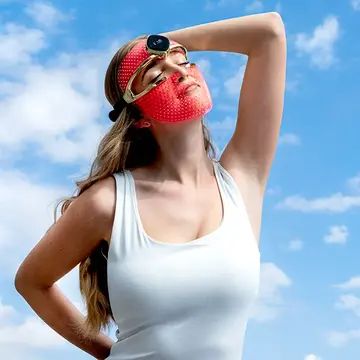
If you’re really not there yet regarding the purchase of a red light therapy device, be it a mask, lamp, or red light panel, you can always just swap your bright overhead lights for a warm-toned bedside lamp or red bulb. Mind you, this will not be red light therapy, but it will prevent overexposure to bright lights or blue light wavelengths.
Distance
If you’ve got yourself a good-quality red light panel or a red light therapy lamp for sleep, the question often arises of whether you need to be glued to the therapeutic window of about 20 cm. No. This may be the case for face masks, but LED light panels and lamps and were designed for full-body well-being, not just focused on surface skin effects. So no, you don’t need to sit inches from a panel. Good ones will give you meters around to work with, and for some who don’t have any serious circadian rhythm issues, even ambient exposure is often enough to improve sleep quality, annulling the damage of blue light exposure late in the day.
Consistency and habit stacking
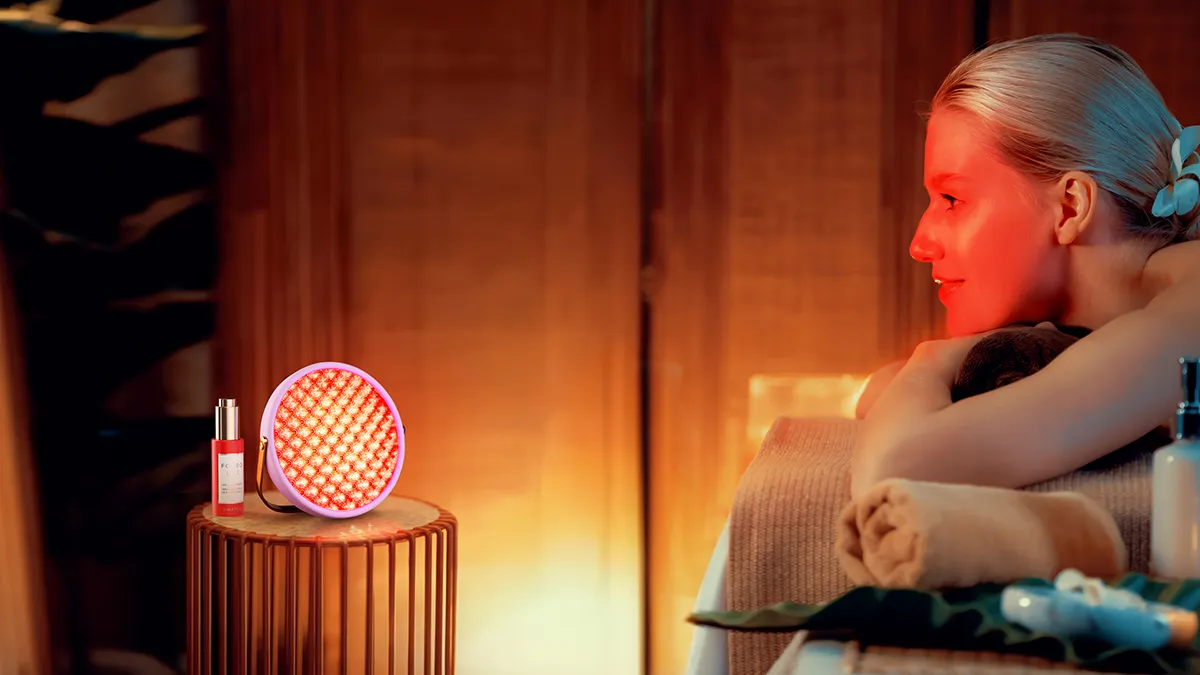
Like most biological processes, this works best when it becomes a habit, rather than a day or two of experimentation. You don’t need to just sit in front of your red lights at night and twiddle your thumbs. As the internet sensation lady said: Ain’t nobody got time for that!” - and she was right. You can stack habits. Do some evening skincare, braid your kids' hair, do a mani-pedi, listen to a podcast, do your bills, read a book if the red is not distracting you (It's safe for the eyes in a lot of modern panels or lamps; unless the instructions on your particular device say to wear protective goggles or sunglasses). You’re not a slave to this therapeutic pool of light.
When choosing a red light therapy lamp for sleep, prioritize:
- Warm wavelength (around 600–700 nm), or ideally, a red light lamp or red light therapy panel that can multitask and be used for various purposes or combined with other treatments. You’re going to be investing in something anyway, so why not get more options of light wavelengths (colors) and intensities in the same device?
- Low brightness, control over the brightness setting, or an in-built, pre-programmed mode designed for pre-sleep. An intense red light paired with a red light serum may be great for skin rejuvenation, but you’re not here for that today, nor are you trying to simulate daylight (the best lamps will also have a wake-up mode. Look for those as they can completely replace the rude, brutish alarm clocks you’re using now.
- Compact and transportable form, because you will travel, you may want to sleep in another room, do something at the kitchen table while doing red light therapy, or make a little spa night for yourself in the bathroom.
- Good battery life. It’s no fun being tethered to anything, even less so to an outlet, and you don’t need another item to keep track of that constantly needs to be charged.
- Clinically proven efficacy is a must. We need 3rd-party trials to assess the validity of the brands' claims, because without these, anyone can just say what they fancy, and we’d be throwing away money on empty promises, which is kind of sad, since we’ve traded some of our lives for that money. Look for proof, and not pretty words (valid in purchases and life in general). And read your manual to see if you can use your red light therapy device every day.
Device suggestions
The market is so saturated with claims and products that it’s getting increasingly hard to see the tree from the forest. The more we try to get informed, the deeper the rabbit hole goes. So, to make it easy, we’ll suggest two brands and the devices that were initially conceived primarily as skincare products but can also double as red light therapy for sleep. In our opinion, a multitasker is an ideal choice, especially if you’re in the life phase where you’re trying to get rid of redundancies and are leaning towards minimalism and multifunctionality, focusing on a few quality items rather than shelves full of half-solutions. Here are a few suggestions to make hunting for your perfect La-La-Land lamp much easier:
FAQ™ Dual LED Panel
Super easy to use, and spanning blue, amber, red, near-infrared, and deep near-infrared, the FAQ™ Dual LED Panel, from the FAQ™ Swiss anti-aging line, features a double-winged panel that you can close like a matte gold book. It has 512 diamond-shaped LEDs that prevent unnecessary light dispersion and weakening. Thsi panel was designed to fulfill many needs at once, including increasing ATP (cell energy) in the mitochondria needed for all life processes (and rejuvenation), to reducing raging inflammation in tissues, fading hyperpigmentation, and nudging collagen and cell turnover as it regulates the circadian rhythm and improves mood if you've been feeling down for no obvious reason, especially in the long dark winter months. A single device will therefore be used for skin rejuvenation, strengthening follicles, and stimulating hair growth, faster joint and muscle recovery after physical exertion, and improved circulation, while also boosting immunity and longevity.
But the money shot here is the wake-up and energize function you can apply about 10 minutes after you wake up, which will simulate early-morning light and properly set your circadian rhythm for that day. For those who have poor-quality sleep or have trouble relaxing and letting go in the evening, use the panels 10-15 minutes before slipping under the covers. By now, you know that red light in the evening supports melatonin production, so you can start to feel sleepy, while near-infrared and deep near-infrared light capabilities promote deeper, more restorative (non-REM) sleep.

But consumer-reported, 3rd-party clinical testing with 33 healthy female & male subjects aged 31 - 55 years over a 28-day period indicates that 100% of users report feeling less fatigued, so something good is happening. If we had to put a finger on it, we'd bet on the combination of better melatonin secretion and perhaps the anti-inflammatory effects.
UFO™ Advanced LED Lighthouse Panel
The ultimate red light therapy lamp for sleep, UFO™ Advanced LED Lighthouse Panel is no bigger than a vanity makeup mirror but packs the power of a whole lot of Fresnel lenses. This gave it its "Lighthouse" part of the name, as it operates just like a lighthouse light does, projecting an intense LED light therapy, not losing power even at 2 meters away. A genius move to adapt this technology to improve the efficacy of one of the least invasive, most effective, and infinitely versatile beauty, health, sleep, and wellbeing therapies.
It's difficult to say which one is better for you, but the compactness and the projection power of the petite Lighthouse sure make it a contender. The span of wavelengths is not much different from the FAQ™ dual panel, but what impressed us here is that it has built-in Sleep Mode and Wake Up Mode, which you can set to a preferred wake-up time like a visual alarm clock. No more desperate raising your fists into the sky, abruptly torn from your dreams by the violence of alarm clocks.
Here, we've also sifted through the 3rd-party trials and looked at what consumers had to say. Based on 3rd-party clinical testing with 31 healthy female subjects aged 31 - 49 years, over a 28-day period, 100% of users reported that their mood is more balanced, and 97 % of users reported that they fall asleep faster & their overall sleep quality is improved, and that they wake up feeling more refreshed, and feel alert & focused.
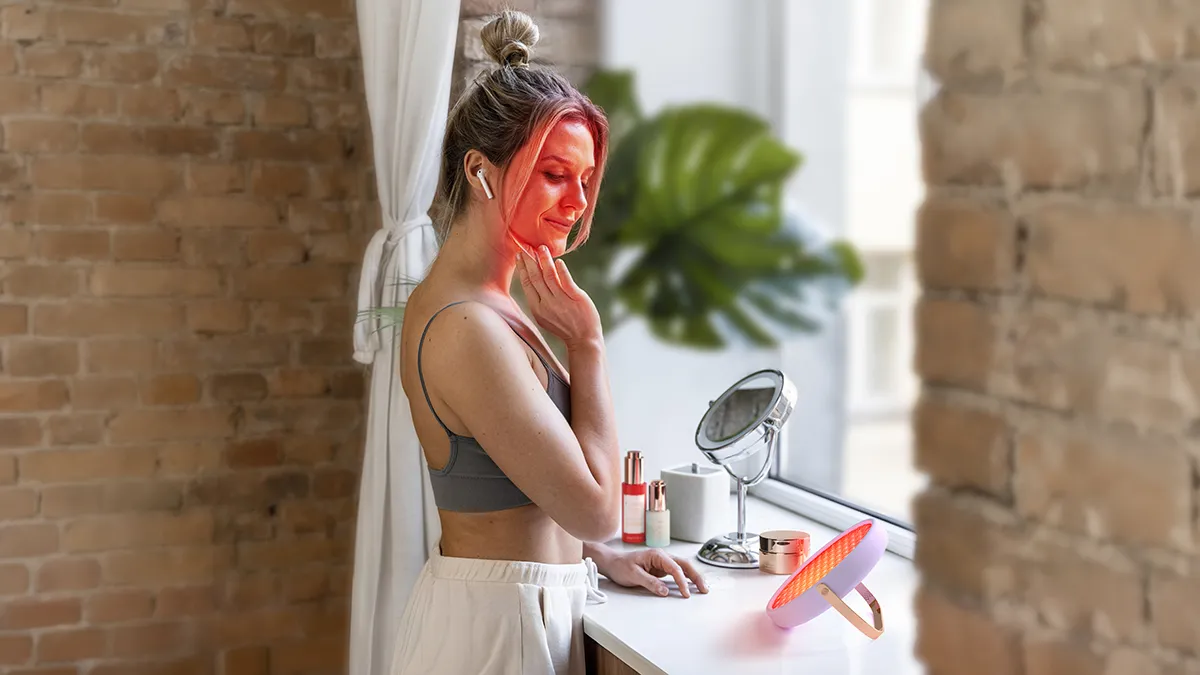
After the first hand-me-down red light lamp (now I've got the dual panels), I got myself a new one. The old one was working fine, there was nothing wrong with it, I just got a new one (or let’s say a second one and took the first one to a vacation cabin, just because I could, and because after my initial sleep-deprived skepticism (skepticism is good, keep the spark alive), I was quite surprised at the results.
It was not something that happened in a single evening of use. My method was to relax in my red-light-therapy-for-sleep corner, just be, and breathe. I’ve tried reading (because my device allowed me to use it without protective eyewear), but didn’t like it under red light, so I just chilled, focused on my breathing, and let go of the crap of the day. I’d say this little mental clean-up also helped in the change I’ve noticed. I saw no change on the first day, but in retrospect, I may have been so excited about the device that I couldn't sleep. The next few nights, I saw I could fall asleep more easily, as well as a lessening grudge toward my fall-asleep-instantly husband.
While I would once feel the need to take my phone and scroll aimlessly because I was just not sleepy, after red light exposure, I’d already felt sleepy enough when I got in bed that taking the phone felt like a hassle (but it still did it a few nights because I was an addict). This stopped soon, as I got in the groove, and I really do think that a few nights change nothing, but that consistent use of red lights at night somehow shifts you back into a natural rhythm, and that was exactly what I wanted - A permanent life improvement, not just a temporary quick fix (that I could have gotten from sleeping pills). Skipping one or two nights has no effect, but if I skip 3 or 4 nights, I start to slowly drift back into my old habits.
Before I had a second red light therapy device, I forgot to take the original one to the cottage and panicked that what if the insomnia returns on this mini vacation from life. But it turns out I had healed and restored my circadian rhythm to the point that I didn’t even need a wake-up alarm anymore; I know exactly when I’m sleepy and when I’ll wake up spontaneously, and could skip a few nights of red light therapy without any major consequence. But, keep in mind, that I have no kids, and can afford to wake up spontaneously, rather than by crying or a toddler flying-squirrel-jumping into my bed. Still, I don’t know who needs it more than parents who are finishing up things around the house when the kids fall asleep, only to be too wired to sleep, thinking about all that needs to be done tomorrow. Worry will knock you off tilt just like blue light by raising cortisol instead of melatonin.
What to do besides red light for better sleep
Red light therapy for sleep helps for sure, but is a part of a bigger picture and a constellation of good habits in our evening wind down, that should mimic the traditional ways we slept (although there’s some evidence that biphasic sleep, where you’d have two bouts of sleep interrupted by an awake period, was also normal if you went to sleep at sundown).
To improve sleep quality further, pair red light with:
- Limiting screen exposure at night. This is not news, and you’ve already noticed you fall asleep more easily if you read a book rather than scrolling or staring at a laptop screen right before sleep.
- Keeping a consistent sleep schedule. The body loves consistency in the most important things keeping us alive, like breathing, food, and sleep.
- Cooling your bedroom slightly. Turn off the radiator in your room during the day or open windows for half an hour before you lie down. You’ll fall asleep faster and sleep more deeply in a cooler room than in a warm one.
- Avoiding caffeine late in the day. We’ve started to perceive coffee as just another drink. It is not. It’s a stimulant that has real physiological effects, and some people feel it more, some less. If you’re a coffee drinker, limit your caffeine to the first part of the day, as it takes a while to wear off. After 4 hours, half of the caffeine you’ve taken is still circulating in your system.
- No excessive liquids before sleep. Thai includes water, tea, or juices. Sure, you should be hydrated, but don’t go crazy, because the body will wake you up in the middle of the night to pee, and many of us have trouble going back to sleep, unnecessarily disrupting our sleep architecture due to poor timing.
- Eat something light. Heavy meals before bed are a recipe for feeling hot, heavy, uncomfortable, tossing, turning, and finally getting frustrated and getting up. You’ll most likely also be thirsty after salty and fatty meals, setting yourself up for the previous having-to-pee point.
- Hot shower or a bath. It works for a reason. Not only due to the relaxation effect of warmth on the muscles, but also because it is followed by a sudden huge thermal dump that is perfect for sleep, as the body needs to drop its body temperature about 1°C to fall asleep, and a hot shower is a natural way to achieve this.
Fast FAQ Round
Is red light therapy good for sleep?
Yes—by supporting melatonin production and minimizing circadian disruption.
How long before bed should you use red light therapy?
About 30–60 minutes is ideal.
Does red light therapy increase melatonin?
Some studies suggest it may support melatonin levels, or at least not suppress them like blue light.
Can red light therapy help with insomnia?
It may help improve sleep onset and quality, especially when combined with good sleep hygiene.
Can red light therapy help with sleep apnea?
Currently, there is insufficient evidence to support it as a primary treatment.
Conclusion: Can Red Light Therapy Help You Sleep Better?
So, when you weigh all of this, is red light therapy good for sleep? For many people, me included, yes. Not because it sedates you or pumps you with an unnatural amount of melatonin. Not because it overrides your biology, forcing sleep on a rested body, but because it respects the body's processes and the regular hormonal interplay. We may all be different, but some things in this fabulous body work the same.
In a world that regularly pushes brightness, stimulation, and the extension of the day, the hustle culture that praises and rewards us for staying awake and grinding when we should be resting, red light therapy for sleep is a quiet counterbalance, calming down cortisol and letting melatonin rule the night sky. It is not a thing in itself, more a signal that it’s okay to slow down and return to self. That night can be soft, and sleep is natural and necessary. We can invite it rather than force it. If you give it consistency and pair it with a few thoughtful habits, the shift can feel almost… obvious, like remembering something your body already knew to do, but you’ve just forgotten, because life. You may not notice anything has changed in a single night, but one evening you’ll realize you’re simply tired at the right time, and that is no small victory for the chronically sleep-deprived. If sleep is the place where we repair, restore, and come back to ourselves, then anything that gently leads us there is well worth keeping by the bedside.
I sincerely hope you found my experience useful in any way and that you’ve learned something valuable here today that will help you sleep a little better tonight. So good night, stay cool (literally), curious, well-rested, and gorgeous, and enjoy living in your skin and mind.
Extra reading for those who want to know more about the topics of sleep and red light:
- What is Red Light Therapy?
- No Eyeballing, Just Facts: Is Red LED Therapy Bad for the Eyes?
- The Science Behind Red LED Light Therapy and Its Benefits
- RLT for Skin TLC: Science-Backed Look at Red Light Therapy Benefits
- Slumber Zzzzone: Bad Sleep & Tips on How to Sleep Better
- 1 sheep, 2 sheep, 3 sheep, 4 - Here’s why we sleep and much more


Leave a comment