16 min read
Wax On, Wax Off: Top Hair Removal Methods for Your Skin & Sanity

If you imagined a Stone Age lady in her birthday suit, as one does on a boring Tuesday afternoon, what do you see? I bet you see hairy armpits, nether regions, and legs to make a logger blush. But nope. Stone Age people were already into hair removal, using sharpened flint and seashells as primitive blades. Damn, there must have been some ingrown hair after that (not really, as a modern razor-sharp close shave was not possible, so a bit of hair was left sticking out from the skin, therefore unable to lodge below it).
Ancient Egyptians also removed hair regularly, for hygiene and to prevent lice infestations. Not fun. Their favorite was a hardened beeswax mixed with a sort of sugar paste, and there were some primitive tweezers and first razors at play, too. Ancient Greece and Rome associated smooth skin with wealth and social status, so fancy rich girls used pumice stones, tweezers, and depilatory creams, sometimes concocted from toxic arsenic and quicklime. The history of skincare is full of such delulu formulations that poison their users.
While Christianity discouraged hair removal in the Middle Ages, the Renaissance brought an obsession with plucked eyebrows and receding hairlines, to give an illusion of that drop-dead gorgeous, insanely high forehead. Who knows what generations will think about our current beauty standards a couple of hundred years into the future?

The early 1900s made it much easier with the appearance of the first ever Gillette safety razors, and razors explicitly marketed to women (Milady Décolleté, 1915 - btw no pink tax, it was priced just as the male razor). Just in time, as the roaring 20s cut hemlines and sleeves, exposing arms and legs. Pin-ups, bikinies, and pantyhose solidified shaving as a standard modern beauty practice, and we're all kind of spoiled today with our laser and IPL hair removal.
Human beings have been removing body hair forever, ever more frequently in the latter hundred years or so, maybe trying to escape the unfavorable association with our closest humanoid relatives.
We don’t know why you’re removing hair, and we won't presume. Maybe you want a dolphin-smooth, aquadynamic summer body. Maybe you’re just more comfortable hairless, hate the look or touch of hair (sensory issues), are a professional-ish athlete, or a dedicated amateur. It may be cultural, something your partner enjoys, or you’ve really gotten into naked mole rats recently and are also a swimming teacher. Whatever your reasons, in reality, there is no universally "best" hair removal method that works for everyone. Sugar paste works wonders for me, but my sister has such strong, deep roots that what is mildly uncomfortable for me is flat-out torture to her (Once I pulled the sugar paste off, it was the only time in my life that I saw a face when I wasn’t sure if she’s going to hit me, and not the playful banter hit). So she usually shaves and is contemplating investing in IPL (which also requires you to shave beforehand). We’re all different, individual packages of our own quirks, idiosyncrasies, and hair types.

There is no universal solution, only the best method for you. Every technique comes with pros and cons, and you’ll have to weigh cost, convenience, effectiveness, pain, maintenance, and skin health to find what is right for you and your current circumstance. We are here today to find a sustainable hair removal routine rather than getting stuck in a cycle of razor burn, ingrown hairs, and regret. The hair will keep growing, spending (only) about 10-50 calories a day, and you need to find a method that works for you in the long run.
So we’re gonna glide through the major hair removal methods, explaining how they work, how much they cost, pain levels, who they're best for, and how to avoid the most common mistakes associated with each. The ride may be hairy or smooth, but you’ll emerge knowing more than before. So, let’s go.
To Consider When Removing Hair
Skin Type
The skin type of concern here is mostly sensitive skin. The mimosa of skins that has a problem witha all sorts of stuff, from lufas to anything other than the mildest soap. This skin often reacts differently to shaving or waxing, and chemical depilatories than all other types and can present with far more irritation.
People prone to eczema, rosacea, contact dermatitis, or post-inflammatory hyperpigmentation may need gentler options and/or more careful aftercare.
If you really have problems with all sorts of hair removal products due to skin sensitivities, maybe permanent solutions like laser hair removal are worth considering.
Hair Texture
My thin, light hair is nothing like my sister's dark, thick hair with impressive roots (no, seriously, it’s ridiculous). Hair characteristics matter enormously here.
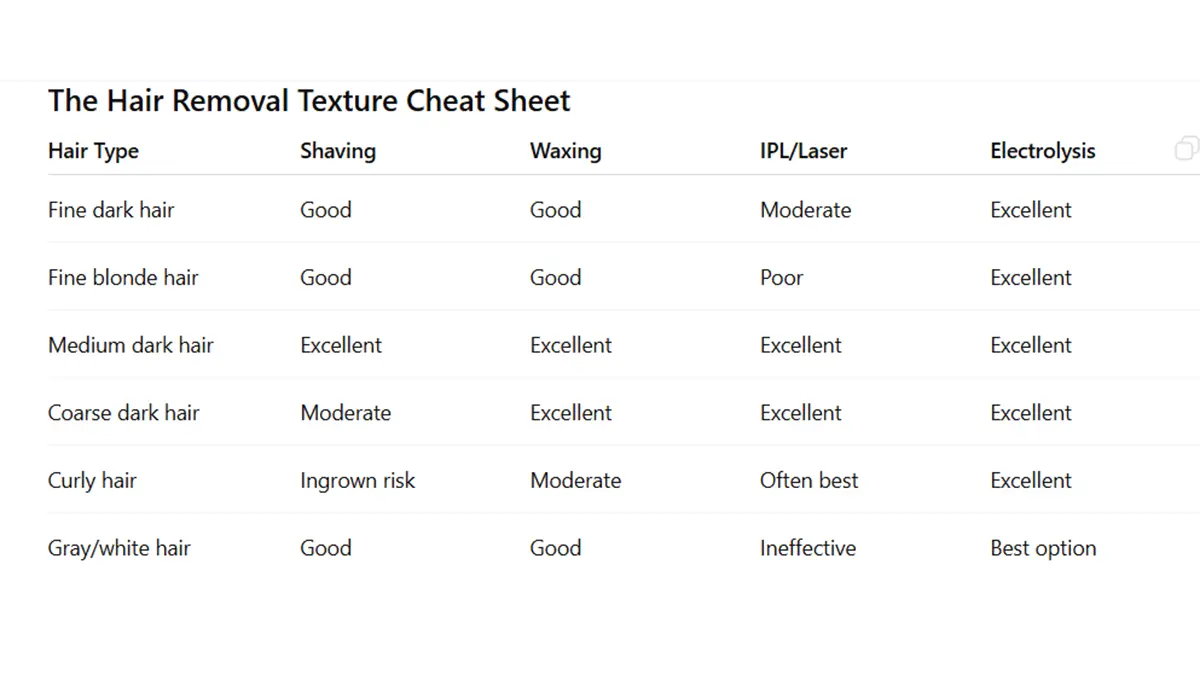
Coarse, curly hair is significantly more prone to ingrown hairs because the curved hair shaft can easily re-enter the skin after removal, and it is not recommended to do close shaves or stretch the skin while shaving with this hair type. Laser or IPL will be your best choice.
If you’ve got medium-thickness dark hair, you’re basically a candidate for all the hair removal methods, and if your hair is fine and blond (or even dark), you’re best off with electrolysis (permanently destroying the root with an electrical charge), but shaving and waxing will work well, and you’re at low risk for ingrown hair.
Body Area
Dermatologists and experienced laser technicians don’t ask "Which method is best?" but rather "Which method is best for this specific body part?" The skin, hair density, sensitivity, friction levels, and risk of ingrown hairs vary significantly from your eyebrows to your bikini line due to skin thickness, hair density, sensitivity, and healing capacity.
Upper Lip
The upper lip is one of those tiny facial areas capable of causing wildly disproportionate emotional distress.
Best methods: Threading, facial waxing, and laser hair removal.
Why they work: Threading offers super precision and removes even fine hairs cleanly from the root. Waxing provides longer-lasting smoothness, and laser treatments can reduce regrowth over time if you have a Tom Selleck going on there.
Worst solution: Body wax strips or frequent shaving with standard body razors.
Why it can be problematic: Facial skin is thinner and more reactive. Were designed for thicker skin and can irritate, while shaving often leaves visible stubble. Direct sunlight reveals all.
Chin
The chin often produces thicker, more hormonally influenced hairs, which all the ladies with PCOS are well acquainted with.
Best methods: Tweezing, threading, and laser hair removal.
Why they work: Chin hairs tend to be coarse and isolated, perfect candidates for precise removal. Laser treatments are particularly effective because darker, thicker hairs absorb light energy more efficiently, leading to more successful root destruction.
Worst solution: Repeated waxing over irritated or inflamed skin.
Why it can be problematic: Frequent trauma to already-worn-out skin will increase redness, inflammation, and post-inflammatory hyperpigmentation, especially with these coarser ones.
Eyebrows
Eyebrows are perhaps the highest-stakes real estate in personal grooming. They can make or break a look, make you look posh and sophisticated, or perpetually perplexed.
Best methods: Threading and tweezing.
Why they work: Both methods provide millimeter-level precision and allow you to sculpt shape gradually without major commitment in a single pull.
Worst solution: Depilatory creams.
Why it can be problematic: One slip, one distraction, one meow or ping from your phone, and half your eyebrow may be fried.
Underarms
The underarm area presents a unique combination of coarse hair, friction, sweat, and sensitive skin. Bar the bikini, this is the money shot.
Best methods: Shaving, waxing, and laser hair removal.
Why they work: These methods can handle pretty dense growth while accommodating the area's curved anatomy.
Worst solution: Threading.
Why it can be problematic: Technically possible and effective. In practical application, medieval torture.
Arms
Arm hair is often finer and lighter than hair elsewhere on the body. More fluff than hair, and you’re fine with any method that covers a larger surface fast.
Best methods: Shaving, waxing, IPL, and laser treatments.
Why they work: These approaches efficiently cover large surface areas without requiring excessive precision. Waxing may be bothersome and still leave you witha bit of a stubble, so leave it only for emergencies.
Worst solution: Tweezing.
Why it can be problematic: There are approximately 15491044 better uses of your afternoon than plucking hair one by one.
Legs
Large area just like hands.
Best methods: Shaving, waxing, IPL, and laser hair removal.
Why they work: Large areas require efficiency. These methods provide relatively quick coverage with predictable results. Make sure to choose a fast IPL device if you’re treating larger areas, and not just the bikini, armpits, or upper lip.
Worst solution: Threading.
Why it can be problematic: If you finish one leg before becoming eligible for retirement benefits, you've done well.

Bikini Line
Now we’re in the danger zone, craving for bikini smoothness, and abhorring the “pineapple in my pants” walk of early regrowth.
Best methods: Waxing, laser hair removal.
Why they work: Coarse, curly hair responds well to root-removal methods and laser treatments, which also make new hair grow in thinner and less likely to cause ingrown hairs in areas that see a lot of friction (wink wink).
Worst solution: Dull razor blades, DIY hot wax, and no experience, and strong depilatory creams, not specifically formulated for intimate areas.
Why it can be problematic: Chemical (and real) burns in this location tend to become core memories, and dull razors require you to stretch the delicate skin to get all hairs, creating perfect conditions for nice hair boils later.

Back, Chest, Stomach
The back presents a unique challenge because humans, unfortunately, evolved without detachable arms.
Best methods: Laser hair removal and waxing.
Why they work: Both methods efficiently address large areas that are difficult to reach independently.
Worst solution: Tweezing.
Why it can be problematic: Unless you possess multiple elbows and extraordinary flexibility, auto-back-tweezing is not a practical life choice, and the rest will take forever and a day.
Fingers and Knuckles
Tiny areas require tiny solutions.
Best methods: Tweezing and laser hair removal.
Why they work: Hair is usually sparse and easy to target individually (and it’s fun to see plucking on an array you can get so up close).
Worst solution: Wax strips.
Why it can be problematic: The cleanup effort often exceeds the actual hair-removal effort. No need to take a shotgun to a mosquito.
Nose
A public service announcement disguised as a beauty section.
Best methods: Trimming.
Why they work: Nose hairs serve an important biological function by filtering particles before they enter the respiratory system, so we want to leave some length inside the nose to do its job.
Worst solution: Full nostril waxing.
Why it can be problematic: Your nose hairs are not your enemies. They are security guards protecting your lungs. Plus, if you want to punish your man for something, offer them a nose waxing with your sweetest smile.
Ears
Another area where precision matters.
Best methods: Trimming and professional laser treatment.
Why they work: Both allow safe removal without risking injury near important structures like the eardrums.
Worst solution: Deep waxing inside the ear canal. Ouch.
Why it can be problematic: Limited visibility plus hot wax equals a terrible risk-reward ratio.
Acne-Prone Face
This category deserves special treatment because inflammation in the area you’re going to remove hair from changes the rules.
Best methods: Electric razors and carefully selected laser systems.
Why they work: They minimize trauma to already irritated and possibly inflamed follicles.
Worst solution: Waxing directly over active acne.
Why it can be problematic: Wax can lift compromised skin containing inflammation, worsening inflammation and increasing the likelihood of post-inflammatory marks.
Face Prone to Hyperpigmentation
For skin that keeps the calling cards of every minor injury.
Best methods: Threading and appropriately selected laser technologies.
Why they work: These methods can minimize unnecessary trauma when performed correctly.
Worst solution: Repeated tweezing of large facial areas.
Why it can be problematic: Constant follicular injury may trigger pigmentation that lasts far longer than the hair ever would.
Budget
In hair removal, the most expensive option upfront (electrolysis) can sometimes become the bargain option if you're looking at decades of spending on hair removal supplies. As with mortgages, letting emotional vampires near, and buying cheap shoes, the true cost only reveals itself over time. This is an estimate of how much you’ll spend on each method.
- Shaving: €5–€30/month
- Depilatory creams: €5–€15 per use
- Threading: €5–€25/session
- Sugaring: €20–€80/session
- Waxing: €15–€100+/session
- At-home IPL and IPL gel: €200–€600 (one-time investment) - best long-term value in our opinion
- At-home laser: €300–€900 (one-time investment)
- Professional laser: €1,000–€5,000 total
- Electrolysis: €1,000–€10,000+ total

Pain Tolerance
Pain tolerance is a unique experience. I can take a lot on the legs, but I almost fainted when I waxed my lower stomach. My sister doesn’t flinch on arms, but wails on legs or eyebrows. And let’s just all agree that the pubic bone waxing or sugar paste pull can make anyone homicidal. It’s a villain origin story, not a hair removal technique. But an objective guesstimate on pain for each of our methods goes something like this (although it can be slightly better or worse for you personally):
- Depilatory creams: 0/10
- Shaving: 0–1/10
- IPL: 1–3/10
- At-home laser: 2–4/10
- Threading: 4–6/10
- Tweezing: 4–7/10
- Sugaring: 5–7/10
- Waxing: 6–8/10
- Professional laser: 6–9/10
- Electrolysis: 7–10/10

Time Commitment
Time commitment in hair removal doesn’t disappear; it transforms and mutates.
Shaving and creams borrow time from your future. Waxing and threading compress time into less frequent sessions. Laser and IPL redistribute time into upfront investment. Electrolysis concentrates time intensely, then removes the need almost entirely.
Or in less clinical terms: you are always paying — just in different currencies of time. But here is a more practical overview:
- Depilatory creams ~5–15 minutes (plus 5–10 min waiting)
- Shaving ~2–10 minutes
- Electric razors ~5–15 minutes
- Threading & sugaring ~10–30 minutes
- Good at-home IPL devices ~10–30 minutes per session (weekly at first)
- Waxing ~15–45 minutes
- Professional laser hair removal ~10–60 minutes per session (over multiple months)
- Electrolysis ~15–90+ minutes per session (multiple sessions over long periods)

How do Hair Removal Methods Work?
Shaving
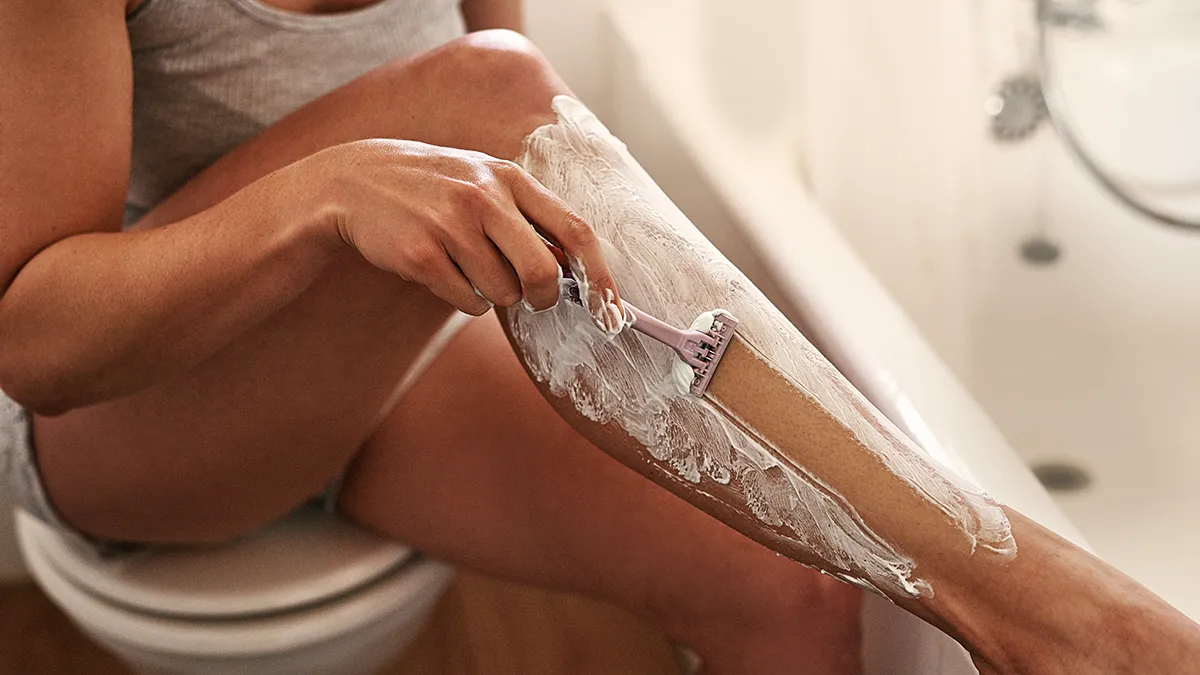
Shaving cuts hair at the skin's surface using a blade. The follicle beneath the skin remains intact, so hair begins growing back immediately, and you’re eligible for stubble quite fast.
Contrary to popular myth and old wives' tales, shaving does not make hair grow back thicker. The blunt edge simply feels coarser than a naturally tapered hair strand.
Pros
Fast
Inexpensive
Painless
Works almost everywhere
Easy to do at home
Cons
Short-lived results
Razor burn
Nicks and cuts
Frequent maintenance
Increased risk of ingrown hairs
Best For
People who prioritize convenience and flexibility and are completely averse to any kind of pain.
Tips
Always use lubrication.
Use sharp blades.
Shave with the grain.
Moisturize afterward.
Waxing
Wax adheres to hair that sticks out of the skin and removes it from the root with a jolt. Because the follicle must regenerate a new hair, results typically last 3–6 weeks, depending on how fast your hair grows.
Pros
Longer-lasting results
Hair often grows back finer over time
No daily maintenance
Cons
Painful
Can cause irritation
Potential for ingrown hairs
Requires hair growth between appointments (you need a bit of length for the wax to stick), but you can also get at-home waxing kits
Best For
Large areas like legs and arms, underarms, bikini lines, and people willing to trade short-term discomfort for longer-term smoothness.
Tips
Exfoliate gently before appointments and avoid intense exercise immediately afterward.
Depilatory Creams
Depilatory creams chemically dissolve hair proteins (keratin), allowing hair to be just wiped away.
Pros
Painless
Affordable
No cuts
Longer-lasting than shaving
Cons
Strong odor
Potential irritation
Allergic reactions possible
Not suitable for sensitive body areas near bodily openings
Best For
People who dislike shaving but consider waxing and epilating too painful.
Tips
Always perform a patch test 24–48 hours before use. The chemistry doesn't care whether you're optimistic. Test if you’re allergic.
Threading
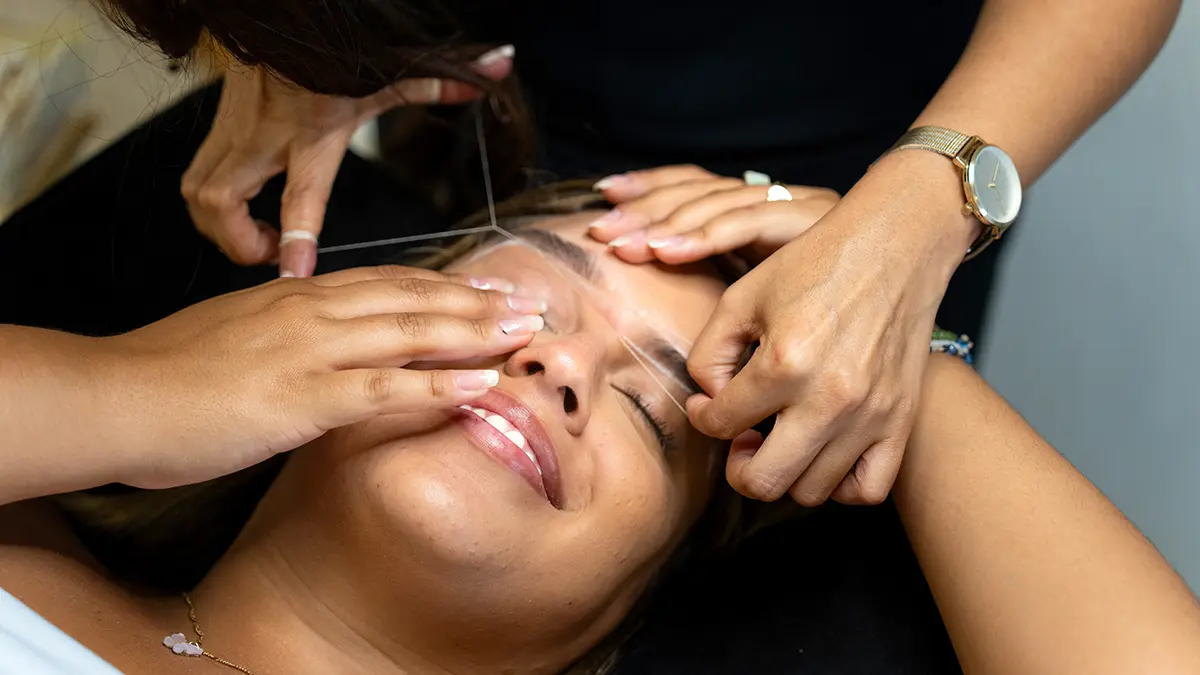
A twisted thread tightly traps and plucks hair from the follicle. It has been used for centuries and remains one of the most precise methods available if you’re skilled.
Pros
Excellent precision
No chemicals
Suitable for sensitive skin
Minimal skin trauma
Cons
Time-consuming
Best for smaller areas
Requires learning a skill
Best For
Small areas like eyebrows, upper lip, and facial shaping.
Tips
Choose an experienced practitioner. Threading is an art form disguised as grooming.
Sugaring
It uses a paste of sugar, water, and lemon to remove hair from the root. In some ways, it is superior to regular wax because it generally adheres more strongly to hair than skin.
Pros
Often gentler than waxing
All natural ingredients
Easier cleanup
Reduced irritation for some people
Cons
Still painful
Requires hair growth
Results vary by practitioner, but you can learn to make the pasta and depilate at home, also
Best For
Sensitive skin that needs a longterm solution, and people prone to waxing irritation.
IPL and At-Home Laser Devices
Easy-to-use IPL (Intense Pulsed Light) and home laser devices target pigment within the hair follicle that absorbs light energy and destroys the hair. Repeated treatments gradually reduce hair growth.
Pros
Long-term reduction
Convenient
Lower cost than clinic treatments
Reduces ingrown hairs
Cons
Requires consistency
Works best on dark hair and fair skin
Less effective on blonde, gray, or red hair
Serious results take months of consistency
No sun exposure after

Best For
People committed to long-term maintenance, who won’t skip treatments.
Tips
Patience is part of the treatment plan; don’t get discouraged if you don’t see results after the first flashing.
Professional Laser Hair Removal
Medical-grade lasers target melanin within the follicle and damage structures responsible for hair growth. Multiple treatments are required at precise times because hair grows in cycles. Clinical studies consistently show significant long-term hair reduction after a series of treatments.
Pros
Significant hair reduction
Less maintenance
Fewer ingrown hairs
Excellent long-term convenience
Cons
Expensive
Requires multiple sessions
Not truly permanent for everyone
Some discomfort
Best For
People seeking long-term reduction with minimal upkeep.
Tips
Choose a reputable clinic that uses technology appropriate for your skin tone. If you have darker skin and/or light hair, talk ot the practitioners. You may not be a good candidate, and I’m sure you can find a more fun way to waste money.

Electrolysis
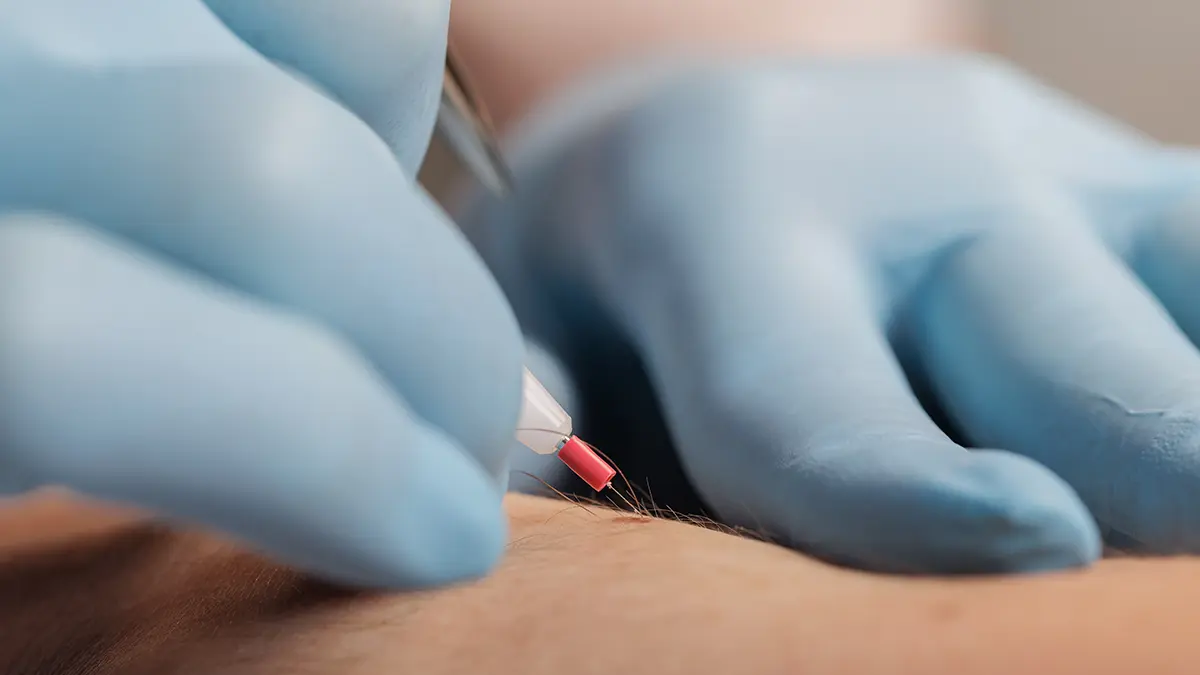
A tiny probe enters every individual follicle and destroys the growth center with electrical current. Unlike lasers, electrolysis does not rely on pigment and is permanent.
Pros
FDA-recognized permanent hair removal
Works on all skin tones
Works on all hair colors
Cons
Time-intensive
Expensive
Can be uncomfortable
Best For
Small areas and people seeking true permanence.
Tips
Think marathon, not sprint here, but the end will be worth it.
Caution Notes
- Not every method is appropriate in every situation, and you should be cautious and aware of your situation.
- Avoid waxing over active acne, sunburned skin, while using isotretinoin, and immediately after chemical peels
- Avoid depilatory creams on irritated skin, open wounds, without patch testing (especially on sensitive areas such as the bikini.
- Avoid IPL or laser on recently tanned skin, if you’re using photosensitizing medications, without proper technology for darker skin tones.
Side Effects of Hair Removal
Even the best method occasionally goes sideways, and no matter how safe or perfectly chosen the method is, the body sometimes has a mind of its own. You may have done everything right, and had a spectacularly skilled practitioner (or you were super slick), and still, you might have worn something too tight after the hair removal, or it was a hot summer day, and you sweated a lot, your thighs rubbed together (oh, thigh gap, where are you?). Considering the vast number of hairs, it’s a miracle, really, that things don’t go wrong more often. What can you do when the hair breaks bad?
- Warm compresses
- Gentle exfoliation
- Avoid picking
- Consider laser if very frequent, infected, and painful

- Cool compresses
- Fragrance-free moisturizers
- Temporary pause from shaving
Hyperpigmentation
- Inflammation can leave behind dark spots, especially in deeper skin tones.
- Sun protection is critical while healing to not make the spots worse (and permanent).
Burns
These are not aesthetic issues, but possibly need medical attention (just like severely infected ingrown hairs). Whether caused by wax or laser, burns require gentle wound care and topicals adapted to help with much more sensitive, moisture- and protection-craving burned skin. If blistering occurs, don’t pop it; go to your dermatologist.
Key Takeaways
Our cave lady had no choice. Today, we do. Hair removal, if we’re being honest, is less about achieving some mythical “perfect smoothness” and more about managing a very human and dual relationship with hair. Hair grows, cycles, returns, and occasionally stages dramatic comebacks exactly when you have somewhere important to be.
There is no single winner in this arena, only methods that align better or worse with your skin type, pain tolerance, time, and willingness to deal with things like ingrown hairs or a brief existential crisis in front of the bathroom mirror. What works beautifully for one person may turn into irritation or razor burn for another, which is not a failure, just physiology doing its thing at the level of an individual phenotype.
Clinically speaking, most methods sit somewhere on a spectrum between temporary removal (shaving, creams), follicle disruption (waxing, IPL, laser), and permanent destruction (electrolysis), each with evidence-backed trade-offs in effectiveness, discomfort, and maintenance. Dermatology literature consistently supports laser and electrolysis as the most durable long-term options, but even those require consistency, cycles, and realistic expectations - the body does not care about marketing promises.
The real goal, then, is not perfection but predictability: fewer surprises, fewer ingrown hairs, and a routine that doesn’t feel like a part-time job you never applied for. Once you find your balance, hair removal stops being a debate and becomes just another maintenance habit - like brushing your teeth.
And if all else fails, there’s always trousers and people who love you regardless of your current hair level. Stay cool, curious, and enjoy living in your gorgeous (more or less) smooth skin.






Leave a comment