13 min read
Tech Truth Time: Do Gel Nail Lamps Cause Cancer & Hand Aging?

No, they do not cause cancer, as far as the research so far is able to tell. Faster hand skin aging, deterioration of structural proteins, and damage accumulation leading to lines, wrinkles, and age spots on hands, on the other hand (oh the puns; don't worry, there'll be more, each worse than the previous one), are a yes here.
Bear in mind we're not talking about a single light box manicure here and there before an event, date, or just because you deserve a treat, but about damage that layers over years. We're talking about regular manicures every couple of weeks that use gel, UV light, or LED nail lamps. Aren’t LED nail lamps safer than UV? They sort of are, but not really. "Wait, what!?" you ask, eyebrow frozen stiff in a high arch, as disbelief flows through your non-blinking person. LED is supposed to be non-ionizing. It doesn't damage DNA, and we love it for all kinds of rejuvenating and restoring light therapies. My mom ironed her under-eye wrinkles with red LED; my uncle fixed his knee inflammation with infrared - you say.
How can this be, how can it do harm? Because in nail lamps, LEDs describe the light source, not the light emitted itself. It’s a bit better because it is more precise than a UV lamp when it comes to an effective wavelength span, so the nail curing can be done in about half the time, but that does not mean it is UV-free. I know... As a lazy-to-upkeep-it-at-home, proud owner of blood-red, permanent, LED-lamp-cured nail polish, I was taken aback, way back. So I decided to do some research for myself and all of you searching for answers today.
As a real (pretending to be a grown-up) person, recovering from real surprise and looking for genuine answers and actionable ways to mitigate the risk of having grandma hands (with no grandma in the room... look, you can't say I didn't warn you about lame puns) in my lap in 10 years' time, I'll try to keep it real and common sense.
There will be some unavoidable science and tech talk, but I will mostly refer you to the study if you're a science buff and know a thing or two about medicine, the biology of aging, or biochemical processes in cells and how they interact with outside radiation. Because that is what light is. Our sun is not shining; it is radiating. It is a nuclear furnace radiating all sorts of wavelengths across the electromagnetic spectrum, of which you can see only a tiny sliver as visible light. But enough of that. Let's jump in and answer questions.
I hope you'll learn something useful today and choose not to sacrifice fabulous and practical, resilient nails and feeling well-kept on the altar of fear, because there are ways to have your cake and eat it too. If you've got any cake, grab a slice (and promise you'll exercise later; it's all about balance) and let's go.
How does a nail UV/LED lamp work?
In a practical sense, light seems basic and pragmatic, something that keeps you from stubbing your toe, stepping on a Lego in the dark, or waking you up when it hits your eyelid in the morning. But this is just the banal manifestation of light, which, for a physicist, is energy (acting as both a particle and a wave at the smallest scale; but that’s beside the point now).
Focused light can cut through steel or operate on the retina as lasers (coherent beams of overlapping peaks and valleys in the wavelength). Light can transmit data and enable telecommunications with fiber optics, or dive into the nano sizes with light microscopes. You can also build 3D holograms or even capture the energy of a photon (a light particle) directly with solar panels, which transform it into electricity. But what does all of this have to do with gel UV lights? The fact is that we need to remember that light is energy that can do a lot of stuff when calibrated and directed.
That energy fact is how we cure gels and nail polish in the light box. We use light energy to cause a polymerization cascade, transmuting the gooey and soft nail gel into a hard, shiny, resistant surface.
Blue light alone does nothing, but it works with gel nail polish made of monomers (mono meaning one) or oligomers (oligo meaning few, aka a few monomers). These are mixed with photoinitiators that absorb the light when you put your painted nails in the UV lamp.
Curing requires a specific wavelength range, near-ultraviolet (near-UV) between 365 nm and 405 nm, which falls into the UVA range. The absorbed UV energy then starts a chemical reaction that causes monomers and oligomers to bind into hard polymer (poly meaning many) chains in about 60 seconds. La di da, that’s how it happens. Now you know, and the more we know, the less likely we are to be bamboozled by false claims and empty promises (not just nail-wise, but in life).
Melanoma and ionizing and non-ionizing radiation
Melanoma is a dangerous form of skin cancer most often associated with overexposure to UV radiation in our context. But radiation comes in many forms and strength levels. Remember how we said light is energy. Energy also exists in wavelengths outside the visible spectrum, like X-rays or gamma rays.
The main difference between ionizing and non-ionizing radiation, and what helps explain why UV nails don’t cause cancer, is that non-ionizing radiation is much weaker. Ionizing radiation, like X-rays and gamma rays, has enough energy to directly damage DNA by knocking electrons out of atoms, while non-ionizing radiation doesn't have enough energy to do that. It causes molecular vibration, tissue heating, or photochemical changes, but not direct DNA mutations that may result in melanoma.
Ionizing radiation seems to bring only a small increase in melanoma risk, but it can cause direct cellular damage and double-strand breaks resulting in a different type of cancer, like basal cell skin cancer, which has a confirmed, clear, direct causal link to high-dose ionizing radiation. Basal cell carcinoma also shows a dose-dependent response to radiotherapy in childhood. Squamous cell carcinoma is more reactive to radiotherapy, not so much to other types of ionizing radiation.
Still, if you often sunbathe to the point of sunburns or overuse tanning beds, the technically non-ionizing UV can accumulate damage over the years and lead to malfunctions and mutations in melanocytes. You don’t need direct mutation of the genetic material, like the consequence of being blasted with gamma rays, to have issues like deteriorating cell structure and proteins that keep the skin taut (such as elastin and collagen, which are a major part of keeping skin looking youthful). Chronic overaccumulation of reactive oxygen species (ROSs) will do it (unless an antioxidant quenches them). That's how we end up with premature skin aging (and organ aging, for that matter).
Some ROS or free-radical damage to cells and tissues is unavoidable. You produce them simply by being alive, breathing, consuming food, and exchanging gases with the environment. This is why antioxidants are naturally present in our food: food really is thy medicine, and it's becoming increasingly important in a more stressful, polluted environment.
The bottom line here is that gel UV lights or their LED counterparts pose an acceptably low risk regarding melanoma. They won’t cause melanoma in a regular exposure of up to 10 minutes every month during a manicure, but frying yourselves under the sun with no protection or abusing tanning beds for years can.
It’s not a single-dose problem, but an issue of accumulated damage. If you have a few glasses of red wine now and again, no problem; if you finish the bottle each evening, you may be in serious trouble down the line. So, remember that frequent and chronic sessions over years can create a cumulative burden, and there have been rare precancerous spots (actinic keratosis) or non-melanoma skin cancers (like squamous cell carcinoma) on the hands and nail beds that remain unprotected even with gloves and SPF.
Gel UV light and hand aging
Now that we’ve dispensed with the question “Do gel nails cause cancer?”, let’s talk about how the damage that leads to visible hand damage actually happens. What's happening at the micro-biochemical level of the cell, and why is UVA so good at causing skin damage?
We love broad-spectrum sunscreen because UVA and UVB aren't the same, and they affect the skin differently. We're not worried much about UVC because the ozone layer absorbs almost all of it, but don't mess around too much with artificial germicidal UVC lamps, or you may get painful eye or skin irritation.
UVA rays have longer wavelengths that penetrate the dermis (the deeper skin layer). In addition to UV nail-curing lamps, they come naturally from the sun and can pass through clouds and regular glass. They cause the lines, wrinkles, and spots we associate with hand aging.
UVB is different. It has shorter wavelengths and cannot penetrate deep into the skin, so it mostly gets stuck in the top skin layer, the epidermis. But they are no less sinister. Overexposure leads to sunburns and direct DNA mutations. But, luckily for you, these also facilitate vitamin D synthesis even with very short sun exposure. They can't pass through ordinary glass, and the amount in UV nail lamps is negligible.
We’ll focus on UVA here and skin layers. UVA penetrates the dermal layer, where the structure that maintains skin integrity lives, and where living cells (the epidermis has some dead cells waiting to slough off; the dermis does not) keep everything running smoothly so your skin looks taut, elastic, radiant, and youthful. But once UVA hits the cells, they will start producing reactive oxygen species (ROS) we’ve mentioned above. We call them free radicals because they roam freely and behave radically (not a scientific explanation, but that’s what I gathered from the info I collected). These rogue molecules are electron-deficient, and they roam around stealing electrons from healthy cells and damaging them unless an antioxidant intercepts them and donates an extra electron.
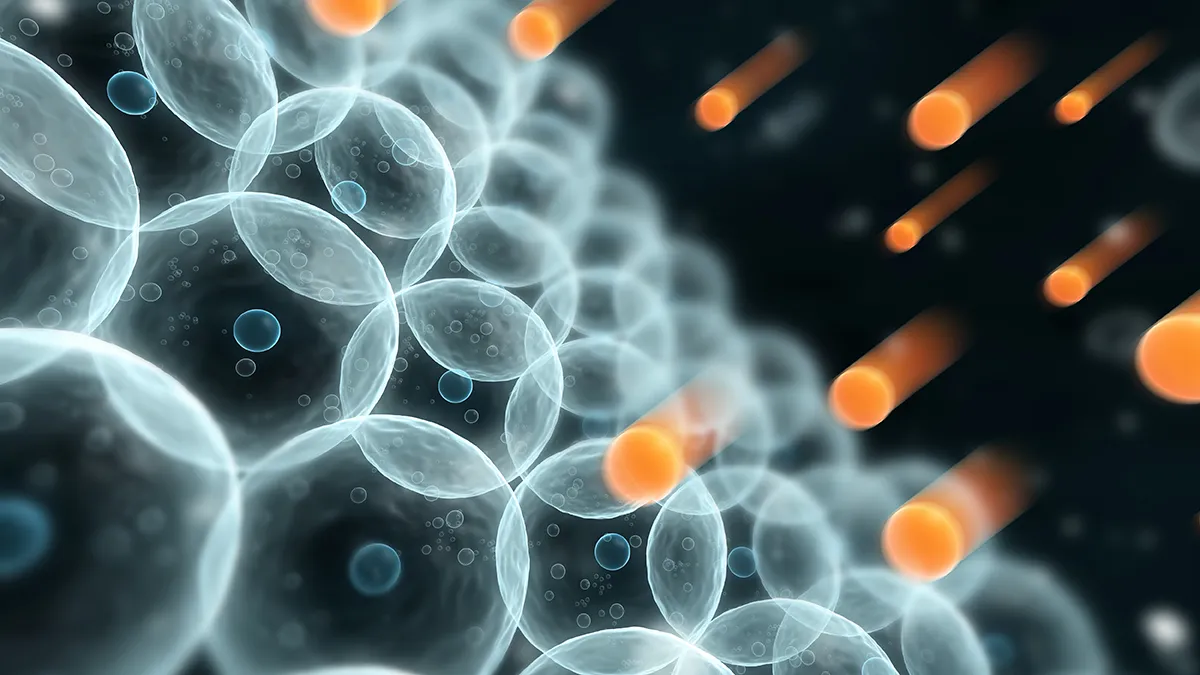
Without antioxidant intervention, free radicals would stress and damage cells to the point where they can't do their job. Cells would abandon important tasks like repairing collagen and elastin, focusing only on survival. If this happens often enough and accumulates, you will see photoaging, wrinkles, lines, loss of elasticity, and age spots, aka grandma hands pending.
LED vs UV nail lamp
As we’ve said. There is no such thing as a fully LED nail lamp. LED in nail lamps describes the bulb type, an electrical component that emits narrower wavelengths needed for gel or nail polish curing, not the type of light emitted. You’ll still need to stay in a UV neighborhood with the LED source's wavelengths to effectively polymerize the monomers in the nail gel.
The LED nail lamp emits mostly UVA, with traces of UVB, which we’ve been culturally educated to associate with cancer and premature skin aging, and for good reason. But after learning that LED does mean UV-free, I found a silver lining: LED nail lamps emit far less UV than old UV lamps.
There are also a few other large long-term benefits to switching to LED nail lamps you must keep in mind:
- Much faster curing times (30–60 seconds as opposed to 60-120 seconds in UV nail lamps)
- Long lifespan (up to 50,000 hours as opposed to UV lamps where the bulbs need to be changed frequently)
- Highly energy-efficient (as opposed to UV lamps that guzzle up energy)
But, for you, practically, less UV exposure and damage risk, faster curing times, and a faster manicure mean a happier you and a happier nail technician, and less time spent on appointments so you can do what you want to do.
I don’t know what kind of relationship you have with your nail technician/artist, or whether you have anyone you can call your own, but mine could have been a surgeon or a sharpshooter. Luckily for me, she chose the noble art of making me feel like I’ve got my life together when I look at my hands. I’ve never met anyone with such freehand precision, high workspace hygiene standards, or seen anyone do such precise work, using a self-made single-haired brush accurate to a fraction of a millimeter at the edges.
Conclusion: If you’re doing a manicure or pedicure once a month or so, you don't need to waste time worrying. American Academy of Dermatology and The Skin Cancer Foundation agree that the risk is low (but cumulative).
What can you do to minimize UV impact?
So, are LED light lamps safer than UV? We’ve learned they are, but even if they already minimize your UV exposure, you can still take a few extra steps. No one cares about you as much as you do, so be kind to yourself.
Some easy tips on how to protect your hands under a UV nail lamp:
- Apply Sunscreen: Ask any dermatologist, 50-year-old who looks 40, or melanoma patient, and they’ll tell you to wear sunscreen in general, as will Buzz Luhrman from the very popular late-90s song. About 20 minutes before your UV LED lamp manicure, apply broad-spectrum SPF 30+ (or even 50) sunscreen. If you feel a bit greasy at the 20-minute mark, move it up to half an hour to an hour before. Easy peasy.
- Wear Protective Gloves: You can easily find fingerless UV-protective gloves, also called manicure gloves, at large retailers or even at your salon. These cover your skin and leave only your nail beds exposed.
- Switch Up Styles: Consider alternating gel UV light manicures with regular air-dried polish to give your skin a break from cumulative UV exposure, especially if your life constellation in the previous months demanded you go more frequently than usual.
- Hydrate Well: Old skin is drier, and aging in general is basically drying out on a whole-body level. Hydrate well by drinking enough water and using a deep-penetrating topical before the nail appointment (hydrated skin fights damage better) and after to speed recovery. Avoid photosensitizing ingredients, like retinoids, AHAs, BHAs, citrus oils and extracts, before the UV lamp.
What if you’ve already damaged your skin?
Well, the light taketh, so it can giveth back.
Your best bet for low-to-moderate damage is red light therapy for hands, and we’d recommend you get yourself an at-home device rather than booking endless clinics. Red light is safe and easy to use at home and has virtually no side effects when used as directed. It works by improving microcirculation and delivering more oxygen- and nutrient-rich blood to cells, and by stimulating the mitochondria (the cell powerhouses) to produce more ATP (the energy that keeps you alive and your cells functioning).
A few fabulous brands make very effective, super easy-to-use at-home light therapy devices, particularly in the red wavelength spectrum, which heal and restore living cells. Some of these brands have even adapted their red light therapy face masks into a semiglove, offering the same rejuvenating treatments to the tops of the hands, which traitorously expose our age even if the facelift and fillers worked.
One of these glove-like masks is the FAQ™ 221 Anti-Aging LED Hand Mask, designed to rejuvenate and restore the youthful appearance of hands. It can be caused by environmental damage, a stripped barrier (from overwashing or mechanical damage), and UV damage from the sun, a UV nail lamp, or a solarium. It is a game-changer in hand care that deserves a slow clap.
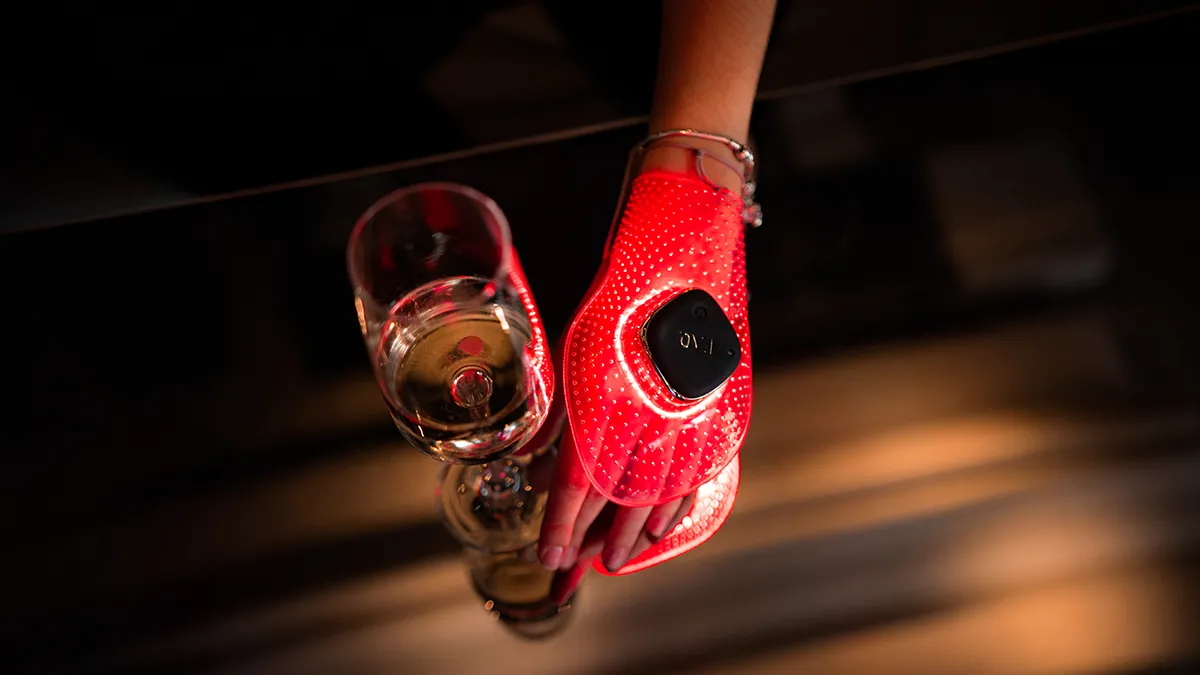
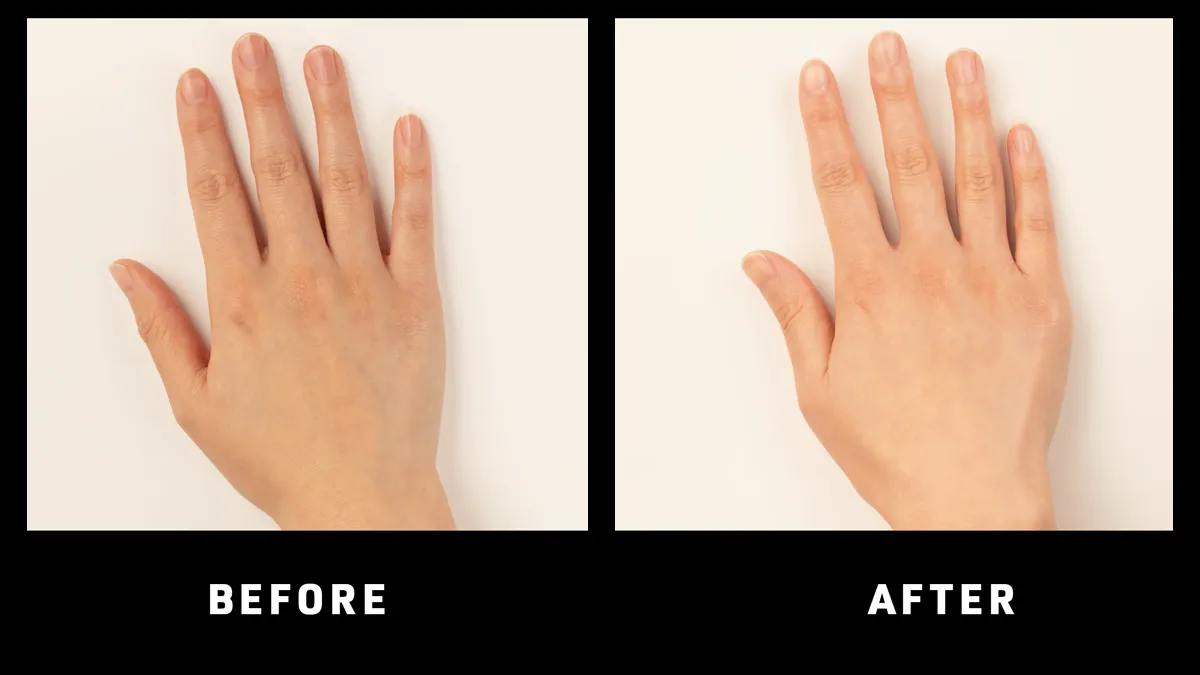
It is clinically proven to reduce wrinkles by 32% and significantly increase firmness and elasticity in just two weeks. This is a sort of thing you’re looking for. Light purity and meticulous design. Don’t trust anyone without clinical data. We operate on facts, not on hearsay. And no, your hands will not look 30 if you’re 60, but you can get a well-kept 45-year-old look with consistency.
GET YOUR FAQ™ 221 Anti-aging LED Hand Mask NOW
To boost collagen and target signs of aging, the mask uses 623 optimized points to deliver 8 LED wavelengths into the skin.
- RED LED (650 nm) helps combat signs of skin aging by boosting collagen production for a more youthful look.
- BLUE LED (420 nm) can help reduce inflammation and kill acne-causing bacteria, making it ideal for those with blemish-prone skin.
- GREEN LED (519 nm) is said to brighten a dull complexion and to even skin tone.
- ORANGE LED (590 nm) is said to revitalize skin and help improve skin texture.
- PURPLE LED (450 nm) is said to reduce the appearance of age spots and hyperpigmentation.
- CYAN LED (463 nm) is said to calm and relieve stressed skin.
- YELLOW LED (570 nm) is said to reduce the appearance of redness and soothe skin.
- NEAR INFRARED LED (850 nm) penetrates the skin more deeply, promoting healing and improving fine lines, sun spots, wrinkles & sagging.
The FAQ™ 221 also features the brand’s signature ergonomic, comfortable design: an open-palm, lightweight, wireless device that molds to your hand like a second skin, letting you move freely while you rejuvenate. This makes it easy to integrate into your daily routine, whether you’re reading a book, doing chores around the house, or simply not wanting to be a George Constanza-level paralyzed hand model for 15 minutes.
Conclusion
The bottom-line takeaway is that current evidence suggests the risk of skin cancer from occasional use of UV and LED nail lamps is extremely low, though the long-term effects of repeated UVA exposure and oxidative stress leading to faster skin aging still deserve to be taken into account.
Still, no need to give up your mani or pedi if it brings you joy. Super simple precautions, such as broad-spectrum SPF 30+, wearing some UV-protective manicure gloves, and occasionally switching to regular nail polish, can make any risk basically zero. Our body knows how to deal with small amounts of UV as we’ve evolved under this relentlessly radiating personal star.
If you’ve stumbled onto this info a decade or more into manicures, as I did, and your hands already show signs of aging (for which I’d sooner blame the decade past than the occasional manicure, a consistent skincare routine and evidence-based treatments like red light therapy for hands can really help to reverse the damage and rejuvenate the skin tissue. So, keep enjoying your claws, choose information over fear, and remember that a bit of prevention beats a whole bunch of cure every time. Stay cool, curious, give yourselves a round of applause for learning something new with me today, and enjoy living in your skin.




Leave a comment